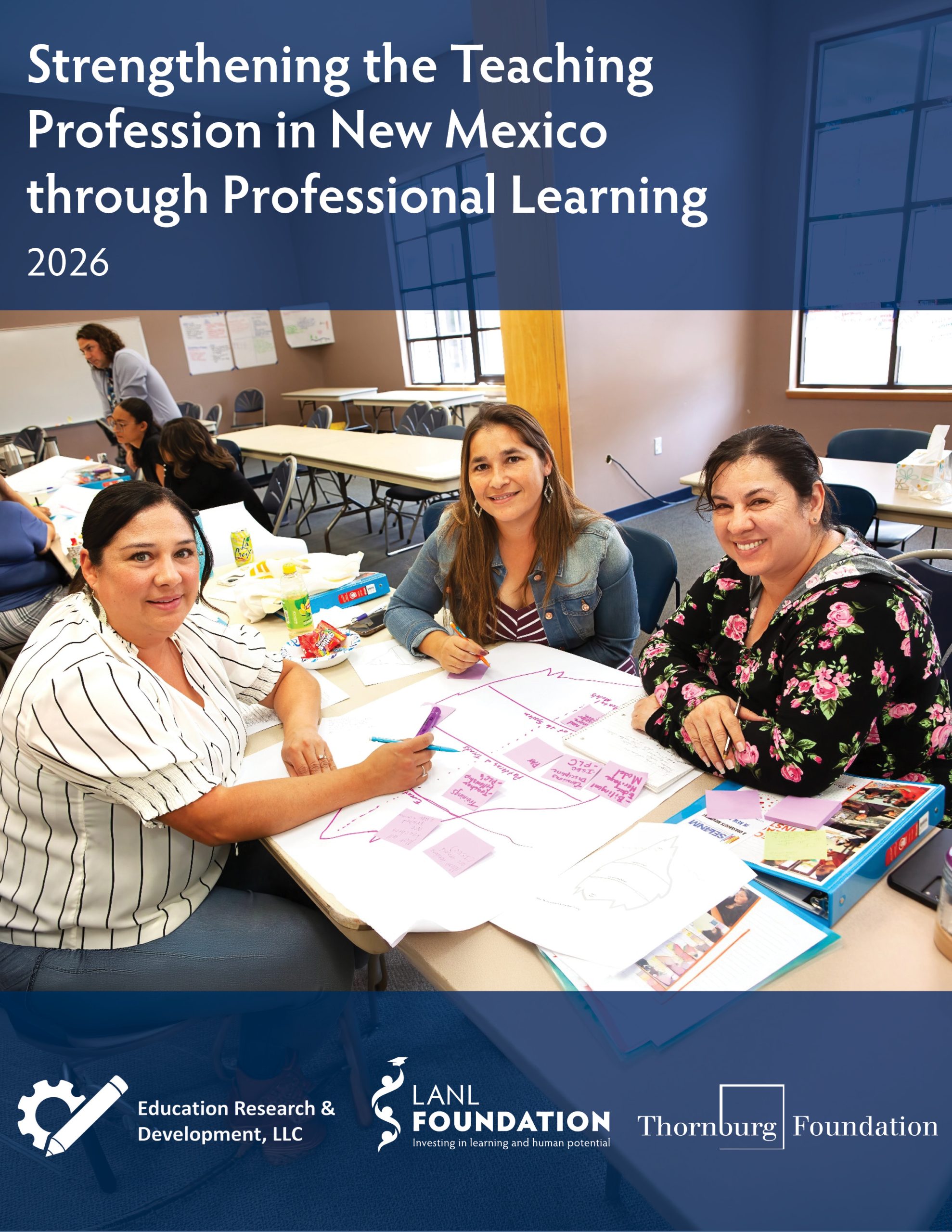
Teaching is among the most complex and consequential professions, requiring educators to meet diverse students’ academic, social, and emotional needs while adapting to evolving standards, instructional practices, and community expectations. New Mexico’s teachers recognize this complexity and are dedicated to their students, schools, communities and profession. Like other highly skilled professionals, teachers need continual opportunities to expand their expertise and maintain standards of practice, making high-quality professional learning essential—not optional—for student success. Research shows that meaningful, sustained professional learning not only strengthens instructional practice and student outcomes but also builds professional communities that reduce isolation, bolster morale, and improve retention. New Mexico’s teachers recognize the importance of professional learning for deepening their professional practice and want more access to differentiated and relevant job-embedded professional learning opportunities.
This report, Strengthening the Teaching Profession in New Mexico through Professional Learning, presents findings from a statewide landscape analysis conducted by Education Research and Development (EdRD) with support from the LANL Foundation and the Thornburg Foundation. The goals were to understand the current state of professional learning in New Mexico and offer policy recommendations for improving statewide systems and programs that support high-quality professional learning.
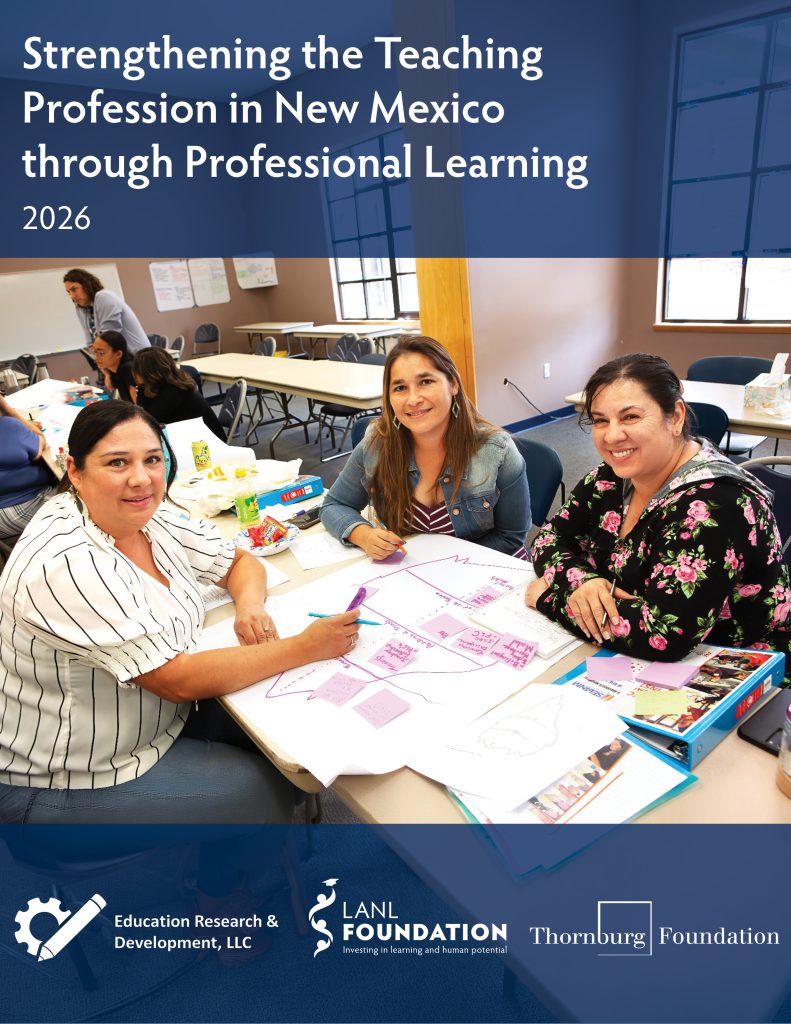
Educators view professional learning as essential but uneven in quality, access, relevance, and effectiveness. While most believe professional learning improves instruction and students’ opportunities to learn, more than 40% described their current experiences as ineffective, inconsistent, or a poor use of time.
Teachers prefer professional learning that is collaborative, job-embedded, and context-specific. The most valued approaches include professional learning communities (PLCs), peer observations, co-planning, and other learning experiences tailored to educators’ content areas, instructional roles, and student populations.
New Mexico has important building blocks in place, including a professional learning framework, broad district participation in Title II-A funded professional learning, promising models such as the High-Quality professional learning Marketplace, and dedicated professionals. However, the professional learning system remains fragmented and misaligned with educator needs. The imbalance between short-term trainings and more effective, sustained professional learning limits impact. Further, professional learning policies and funding do not sufficiently prioritize state goals or the populations named in the Martinez/Yazzie ruling.